How Cebu lechon is made
No injection, no sauce to hide behind. Cebu lechon is seasoned from the inside and roasted slow over charcoal until the skin lacquers to glass. Here is the method, step by step.
The short version
A real Cebu lechon is seasoned from the inside, trussed onto a spit, and turned slowly over glowing charcoal until the fat renders and the skin lacquers to glass. No flavor injection, no sauce to cover for it. The whole craft is in the stuffing, the heat, and the turning.
Step by step
1. Clean and season from the inside
The pig is cleaned and its cavity is packed with aromatics — lemongrass, garlic, onion and scallion — then salted. This is the move that defines Cebu lechon: the flavor is built into the meat itself, not added later at the table.
2. Truss it to the spit
The pig is sewn shut and lashed to a long spit so it turns evenly without tearing. Traditionally that spit is bamboo; modern roasters increasingly use steel — and it should be food-grade stainless steel, not galvanized (zinc-coated) steel. The distinction matters for a pig that roasts for hours and is rubbed with salt and vinegar: under the U.S. FDA Food Code (§4-101.15), galvanized metal is not permitted in contact with acidic food, and heating zinc-coated steel can give off toxic zinc fumes. Stainless steel is inert and food-safe — the right material for a spit.[source]
3. Roast low over charcoal
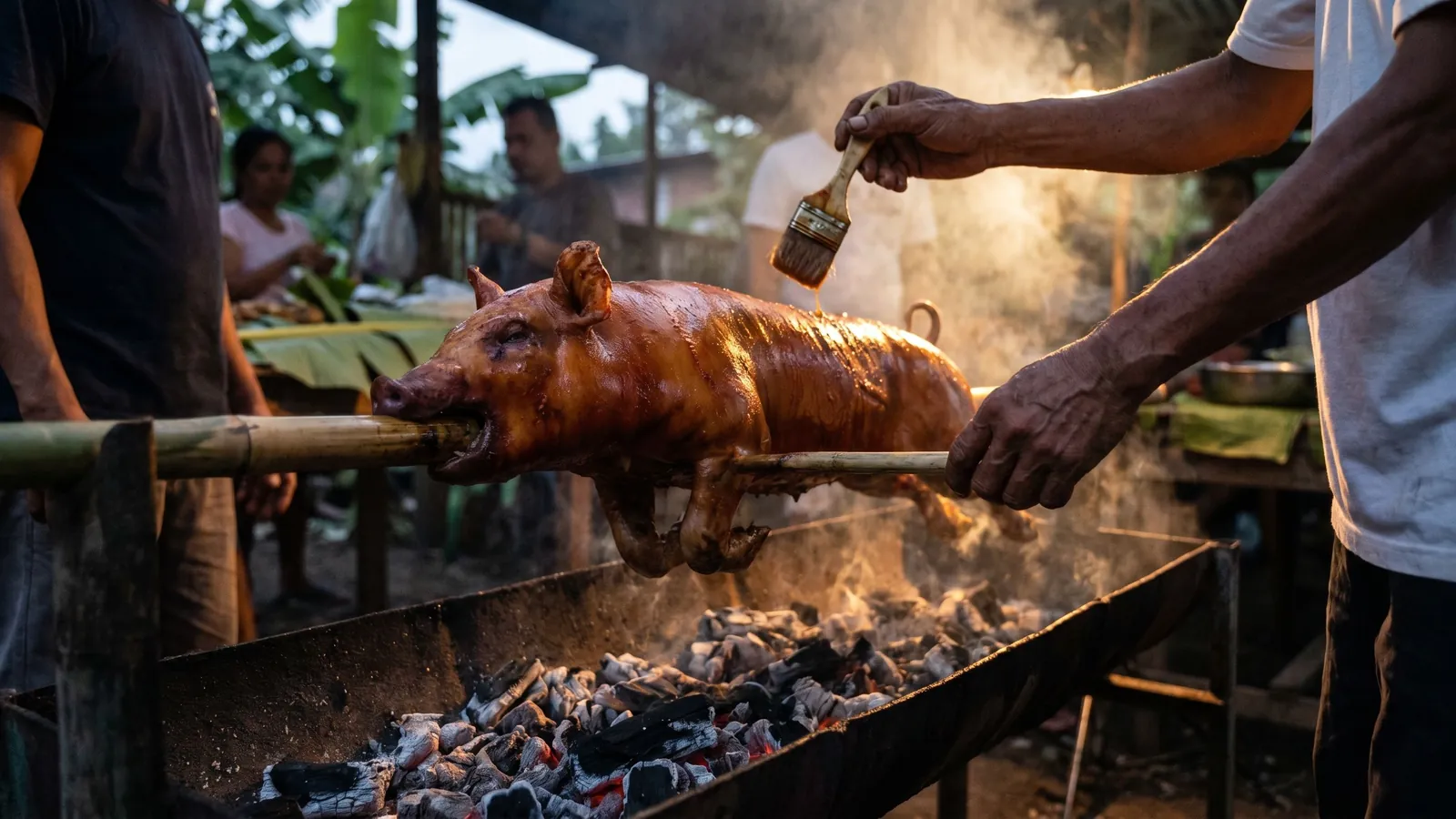
Over a long bed of glowing charcoal, the pig is hand-turned for hours. Charcoal is the traditional method and the one that built Cebu’s reputation — it lends a faint smoke and demands a practiced hand on the spit.
The newer, innovative approach is the large enclosed oven — a purpose-built roasting chamber that surrounds the pig with even, thermostatically steady heat. It can roast several pigs at once, needs far less hand-turning, produces very consistent crackling, and lets a kitchen scale up for big orders; the trade-off is a little less of the open-fire smoke character. Traditional spit or modern oven, the principle never changes: low, steady, patient heat.
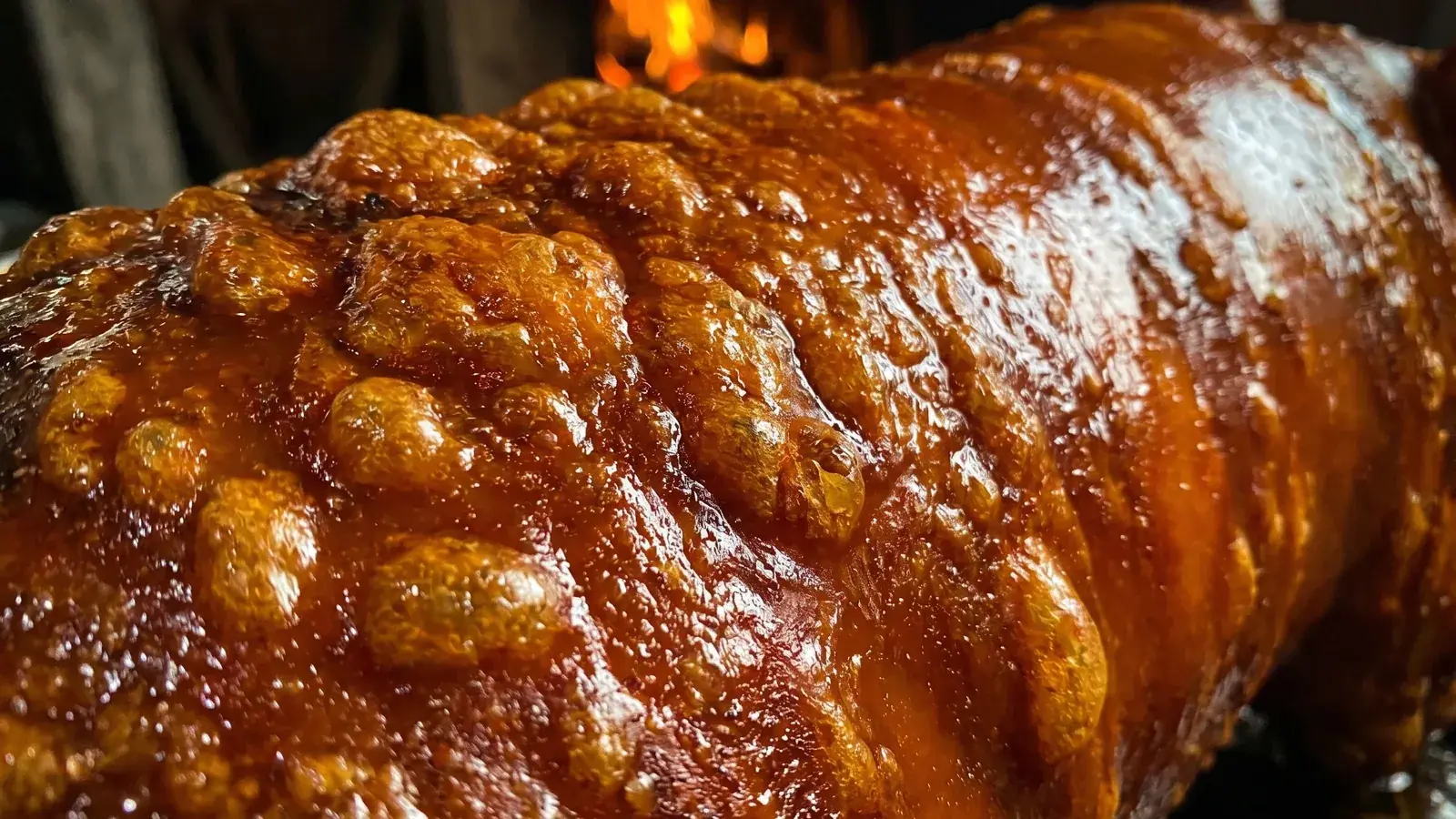
4. Baste until the skin lacquers
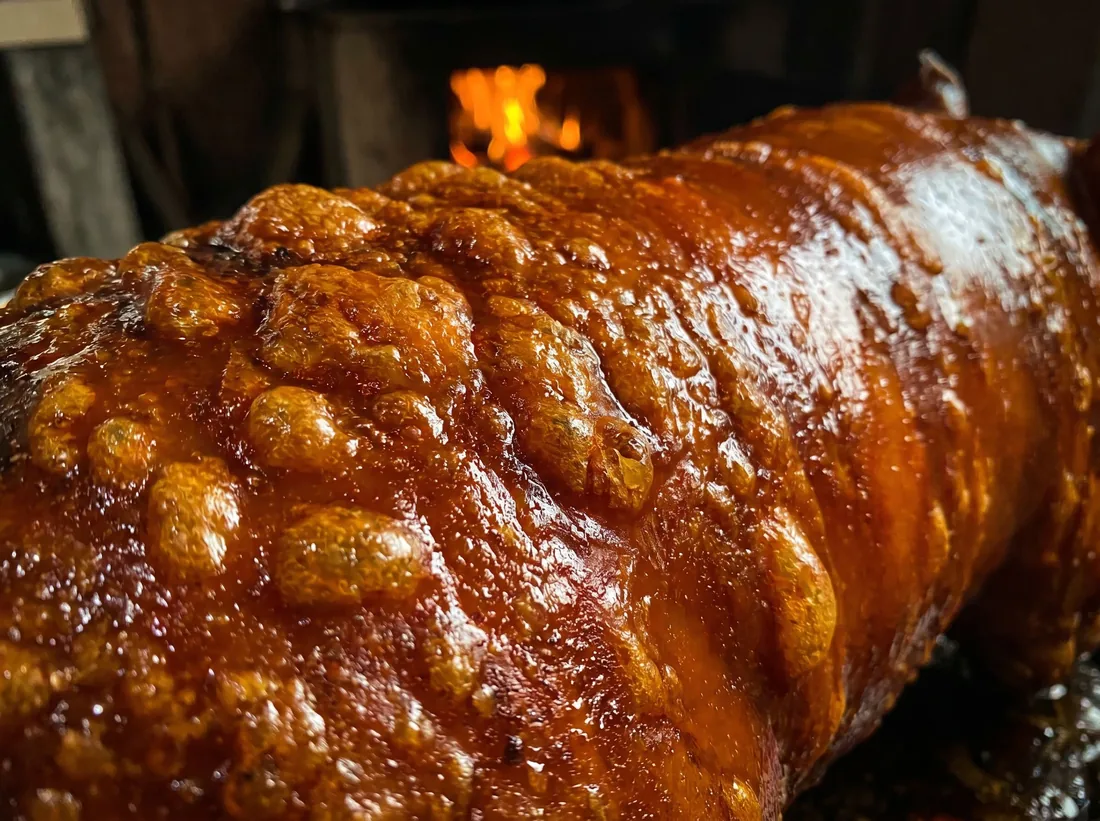
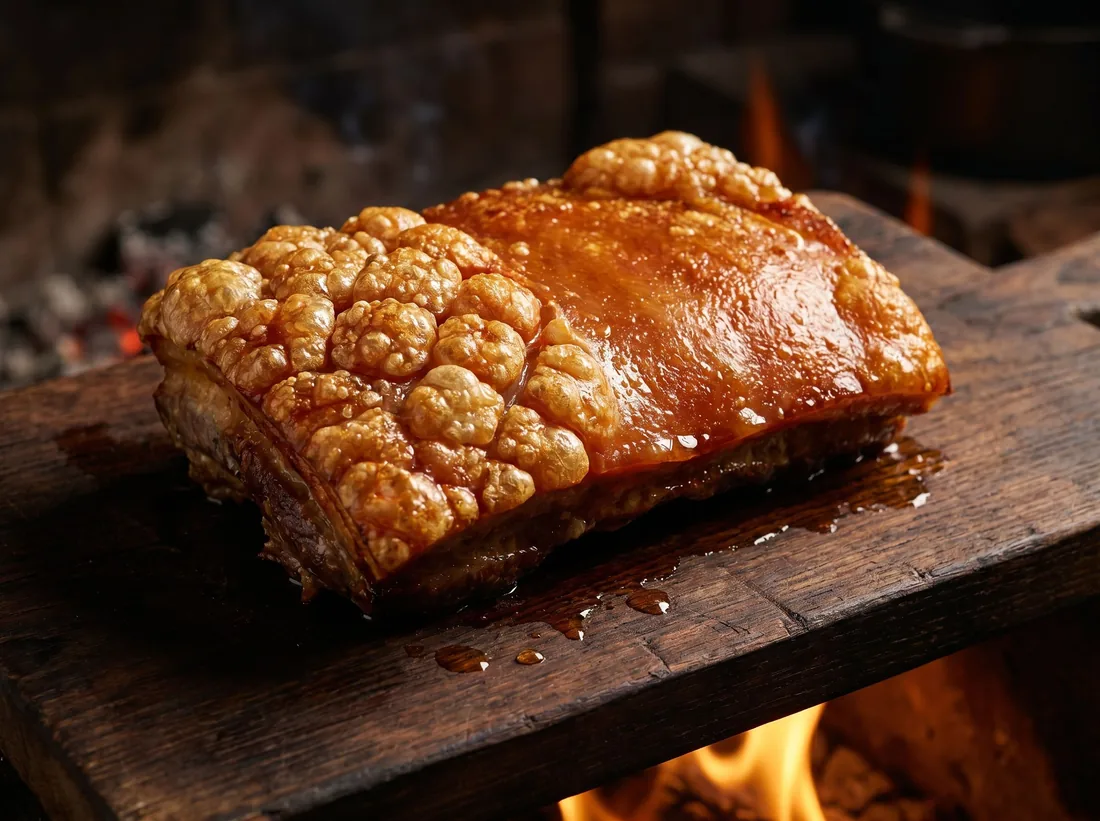
As it turns, the skin is basted so it tightens, blisters and turns a deep mahogany. This is where the famous crackling is made or lost — the science of the crisp is its own story.
5. Rest, then carve
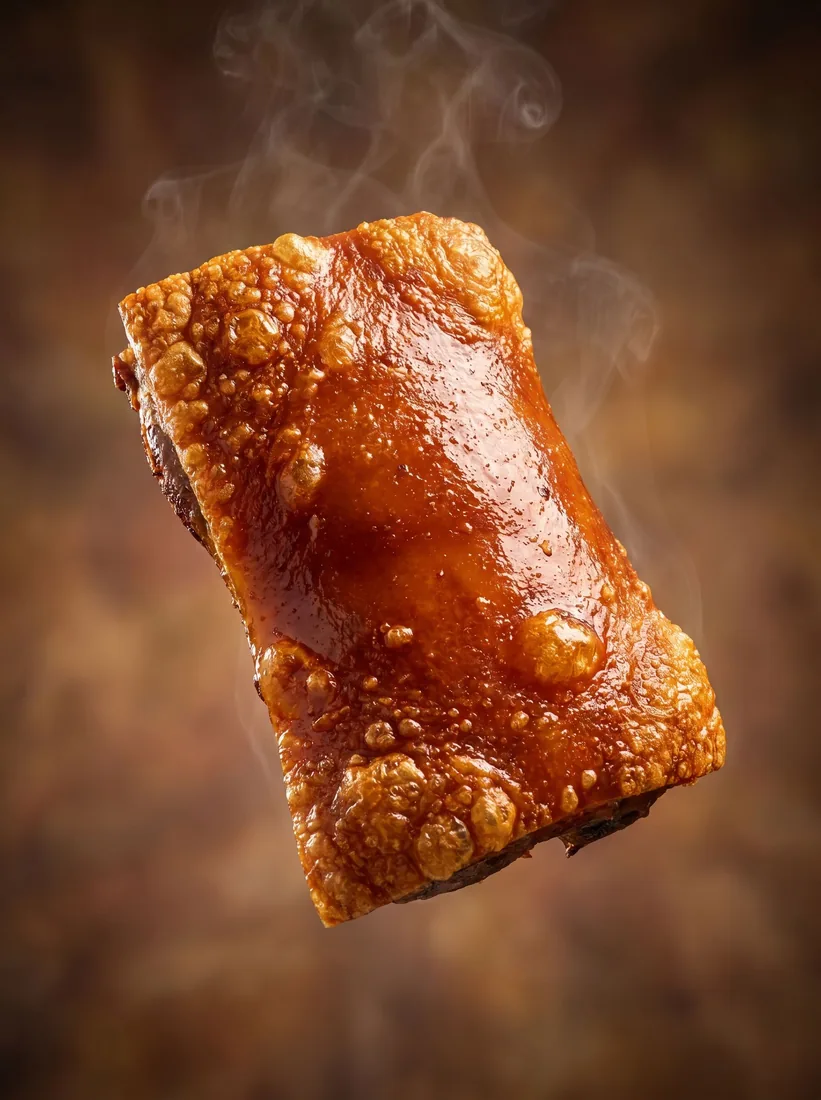
Off the fire, the pig rests so juices settle, then it is carved — skin and meat together in every piece. In Cebu it goes out plain — flavorful enough to need no sawsawan, though a little seasoned vinegar (suka) on the side is the traditional, optional partner.
How much pig do you need?
Pigs are sold by live weight — what the animal weighs before roasting — with whole pigs commonly running from roughly 11 to 30 kilograms. A reliable rule of thumb is about half a kilo of live weight per guest.
It helps to think in cooked weight too. A live pig is not all edible: first the internal organs (laman loob), blood and innards are removed when it is cleaned, then the roast drives off moisture (the same drying that crisps the skin) and renders out the fat. Together that is a little more than half the live weight, so a 20kg live pig comes off the fire at about 9kg of cooked lechon. Plan for roughly 200–300g of cooked lechon per person — the same headcount the half-a-kilo-live rule gives. The size finder on the main guide turns a guest count into a recommended size in one slide.
More from the field guide
Cebu lechon notes — and deals as they drop
Subscribe to the Connect Philippines newsletter for Cebu lechon notes, plus exclusive promos, discounts, and partner offers. Free to join.
This site and newsletter may contain affiliate links, sponsored content, or partner offers. Any such content — aside from programmatic Google AdSense ads — is clearly labeled, and we may earn a commission at no extra cost to you. Full disclosure.
Ask AI about Cebu lechon
Get an instant summary of what Cebu lechon is, where it comes from, and what makes it the best.